

30 Summer Camp Activities for Preschoolers and Kindergarteners
- Most summer camp activities for ages 3 to 6 work best when kept to 15 to 20 minutes, with a choice of two when possible.
- A consistent daily rhythm, with the same start and end routine, helps little campers know what comes next.
- Plan shade, water breaks, and a quiet rest time after lunch, and have an adult watch all water play the entire time.
- The 30 activities are grouped into water play, outdoors and nature, art, movement games, and pretend play and quiet time.
- Weekly themes like Bug Week, Splash Week and Under the Sea make it easy to organize a full summer of camp.
Summer camp for 3- to 6-year-olds looks different from camp for older kids. Little campers need shorter activities, more chances to repeat what they love, shade and water breaks, and time to rest. These 30 activities are made for that age, with a sample camp day and weekly themes to help you plan the summer.
What works for little campers
- Keep it short. Most activities work best at 15 to 20 minutes. Offer a choice of two when you can.
- Keep the same daily rhythm. Start and end each day the same way, like a steady circle time routine, so campers know what comes next.
- Plan shade, water and rest. Build in water breaks, move activities into the shade on hot days, and plan a quiet time after lunch.
- Give a heads-up before changes. A five-minute warning or a short song helps children finish one thing and start the next.
- Watch the small stuff. Use materials too big to fit in a mouth, and check play areas before campers arrive.
- An adult watches all water play. Even a shallow tub needs an adult watching the whole time. Follow your program's rules for water, sun and sunscreen.
Water play (1 to 6)
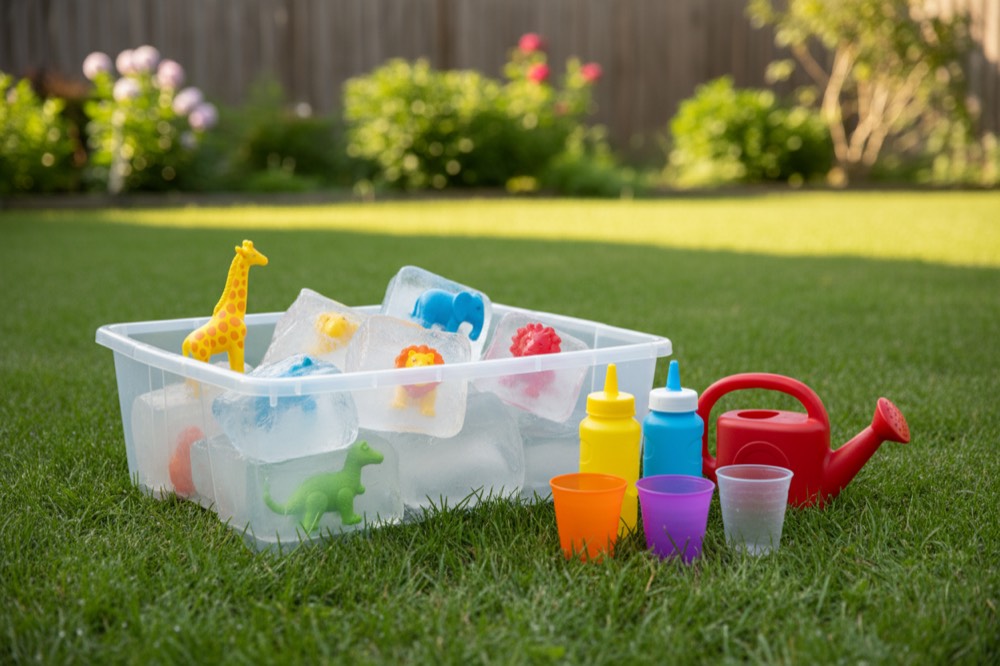
1. Ice Treasure Dig
Freeze large plastic animals in a tub of water the night before. Campers free them with warm water, cups and squeeze bottles.
2. Sink or Float Tub
Gather a basket of objects, like a cork, a spoon, a leaf and a toy boat. Campers guess whether each one will sink or float, then test it in a tub of water.
3. Bubble Station
Set out big wands made from pipe cleaners and a tray of bubble solution. Campers make giant bubbles and chase the ones that float away.
4. Duck Pond Scoop
Float rubber ducks with colors or numbers on the bottom in a water table. Campers scoop them out with small nets, then sort or count what they caught.
5. Toy Car Wash
Fill a tub with soapy water and set out sponges and brushes. Campers wash toy cars, ride-on toys and trikes, then rinse them off.
6. Rainbow Water Mixing
Fill clear cups with red, yellow and blue water. Campers use droppers to mix new colors in an ice cube tray.
Outdoors and nature (7 to 12)
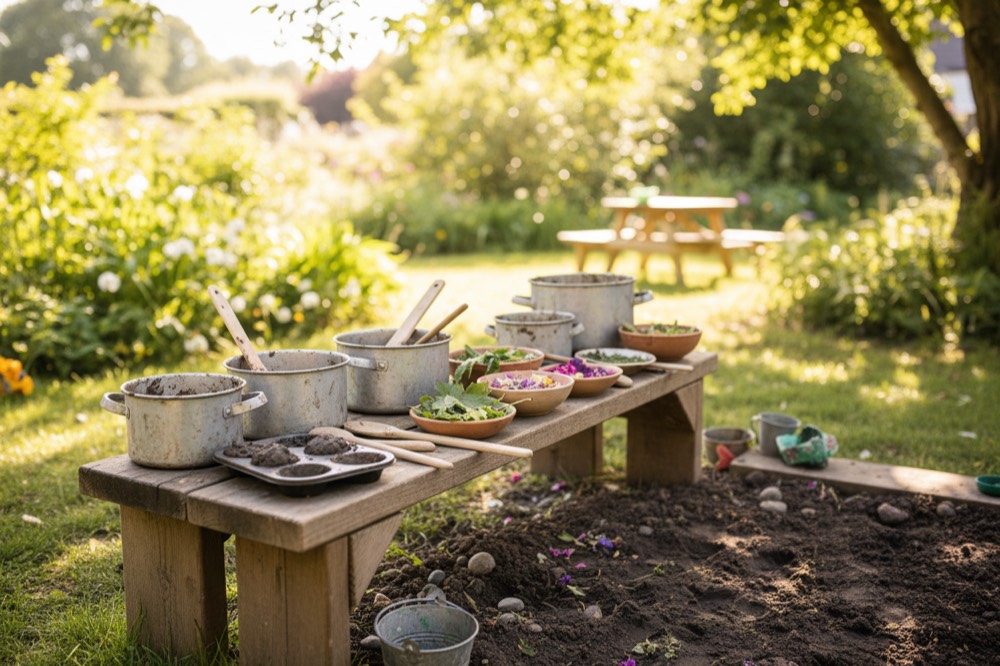
7. Mud Kitchen
Set out old pots, pans, spoons and muffin tins near a patch of dirt and some water. Campers cook up mud pies, leaf soup and pebble cupcakes.
8. Bug Hotel
Campers pile sticks, pinecones, bark and leaves into a crate or a corner of the yard to make a home for bugs. Check on it together each morning.
9. Leaf and Bark Rubbings
Place paper over a leaf or against a tree trunk and rub with the side of a crayon. Campers compare the patterns.
10. Bird Watch Binoculars
Campers decorate two cardboard tubes taped together, then use their "binoculars" to spot birds, clouds and planes.
11. Story Walk
Post the pages of a picture book along a path or fence. Campers walk from page to page as you read the story together.
12. Chalk Road Town
Draw roads, houses and a parking lot in sidewalk chalk. Campers drive toy cars or ride trikes through their town.
Art and making (13 to 18)
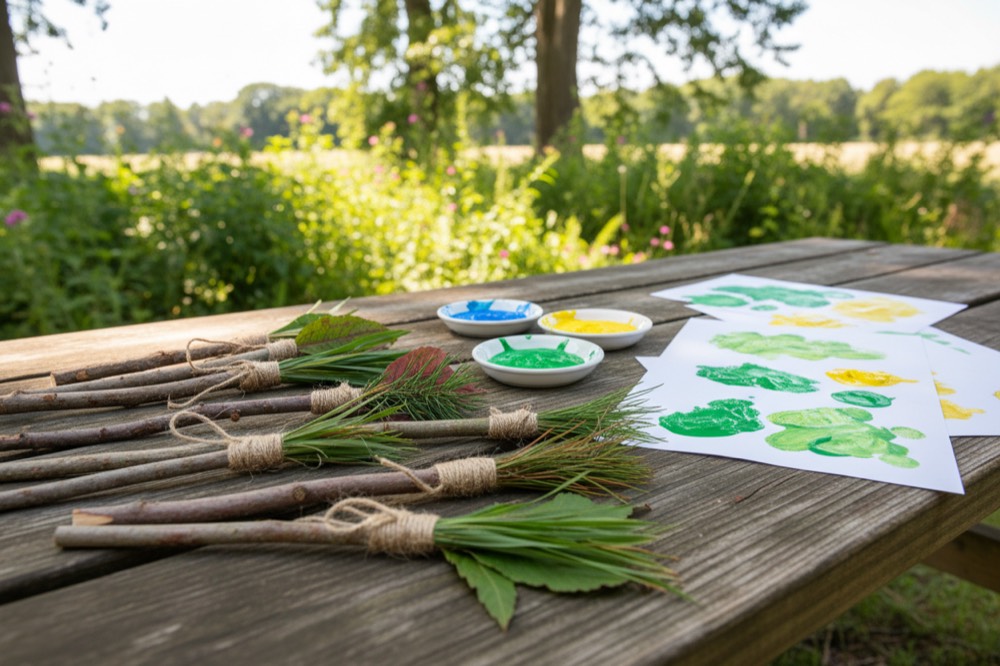
13. Nature Paintbrushes
Tie grass, leaves or pine needles to sticks with string. Campers paint with them and compare the marks each brush makes.
14. Ice Paint
Freeze washable paint in an ice cube tray with a craft stick in each cube. Campers paint on paper as the cubes melt.
15. Paper Plate Animals
Campers turn paper plates into fish, lions or turtles with paint, paper shapes and glue.
16. Cardboard Box Cars
Campers decorate large boxes as cars, boats or rockets, then take them for a "drive" around the yard.
17. Paper Bag Puppets
Campers decorate paper lunch bags with paper, yarn and markers to make puppets for a show later in the week.
18. Playdough Bakery
Set out playdough, rolling pins, cookie cutters and muffin tins. Campers bake pretend treats and set up a bakery counter.
Movement and games (19 to 24)
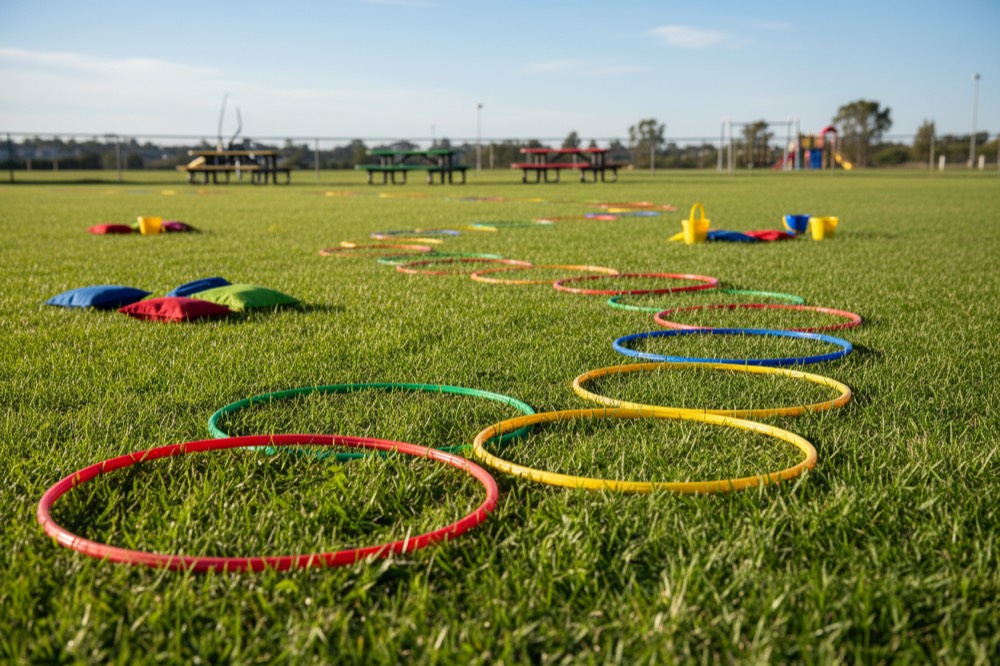
19. Red Light, Green Light
Campers walk on "green light" and stop on "red light." Add "yellow light" for slow motion. Nobody is out: a camper who keeps going just takes one step back.
20. Musical Hoops
Lay hoops on the grass and play music. When the music stops, campers step into a hoop. Take away one hoop each round, and campers share hoops so nobody is out.
21. Hula Hoop Hop
Lay hoops in a path. Campers hop, jump or tiptoe from hoop to hoop, or move like the animal you call out.
22. Beanbag Bucket Toss
Set buckets at different distances. Campers toss beanbags in, then count how many landed in each bucket.
23. Trike Traffic Lights
Make a path with chalk or cones. One camper holds up red and green paper circles while others ride trikes or run along the path. Take turns being the traffic light.
24. Parachute Play
Campers hold the edge of a play parachute. Make waves, bounce soft balls on top like popcorn, or lift it high so a few campers can run underneath.
Pretend play and quiet time (25 to 30)
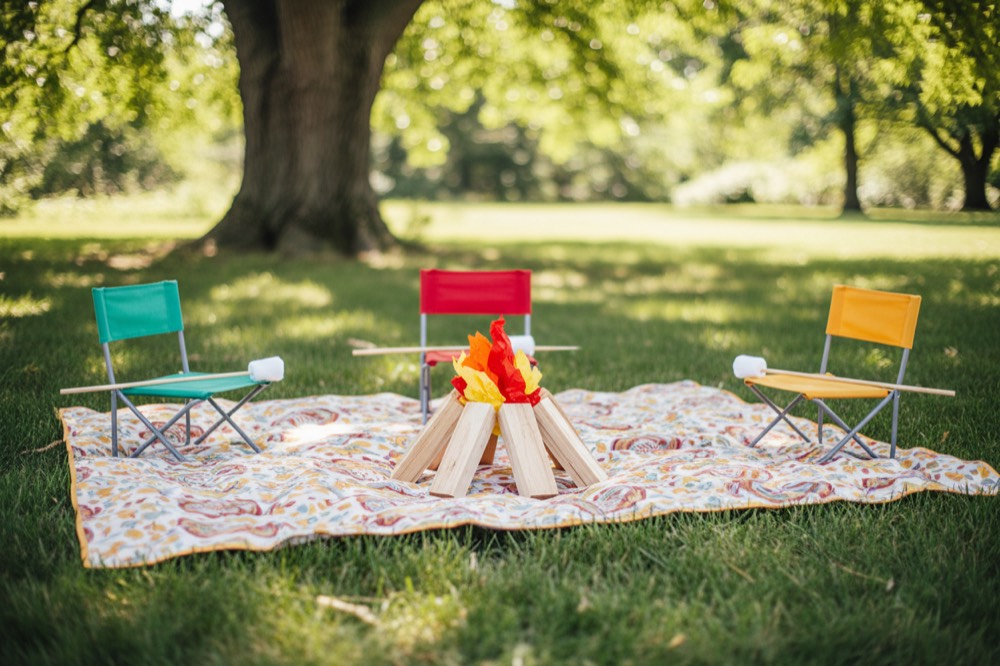
25. Pretend Campfire
Make a "campfire" from paper flames and logs. Campers sit around it, sing camp songs and toast pretend marshmallows on sticks.
26. Ice Cream Shop
Set out cones, scoops and pom-poms in different colors. Campers take orders and serve pretend ice cream.
27. Puppet Show
Drape a sheet over a table for a puppet stage. Campers use their paper bag puppets to put on a show.
28. Shade Story Time
Spread blankets under a tree or a shade sail and read picture books together. It's a good way to rest after a busy morning.
29. Sand and Shell Bins
Fill bins with sand, large shells, scoops and buckets. Campers dig, sort and build in the shade.
30. Cloud Watching
Lie on blankets in a shady spot and look at the clouds. Campers say what shapes they see.
A sample camp day for ages 3 to 6
Here's one way to plan a full day. Change the times to fit your program's hours.
- 8:30: Arrival and free play in the shade
- 9:00: Morning circle: hello song and today's plan
- 9:20: Outdoor activity
- 10:00: Snack and water break
- 10:20: Art or discovery activity
- 11:00: Water play
- 11:45: Lunch
- 12:30: Rest and quiet stories
- 1:45: Pretend play
- 2:30: Snack and water break
- 2:45: Movement games
- 3:30: Goodbye circle and pickup
For a half day, keep the morning through lunch and end with a goodbye circle.
Weekly theme ideas
Pick a theme for each week and choose activities that fit it:
- Bug Week: Bug Hotel, Leaf and Bark Rubbings, Hula Hoop Hop (hop like grasshoppers).
- Splash Week: Sink or Float Tub, Duck Pond Scoop, Bubble Station.
- Under the Sea: Paper Plate Animals (fish and turtles), Sand and Shell Bins, Ice Treasure Dig.
- Things That Go: Cardboard Box Cars, Chalk Road Town, Trike Traffic Lights, Toy Car Wash.
- Camping Week: Pretend Campfire, Story Walk, Bird Watch Binoculars.
- Rainbow Week: Rainbow Water Mixing, Ice Paint, Parachute Play.
- Sky Week: Cloud Watching, Bird Watch Binoculars, Nature Paintbrushes.
- Treat Week: Ice Cream Shop, Playdough Bakery, Mud Kitchen.
For activities for older campers, see 50 summer camp activities. For short games to fill a few minutes, try these circle time games. If you're adding camp to a preschool program, read how to add a summer camp to your daycare and the summer camp registration checklist. Explore Bloomily for camps for the broader camp workflow.