

50 Summer Camp Activities, Plus an Editable Planning Worksheet
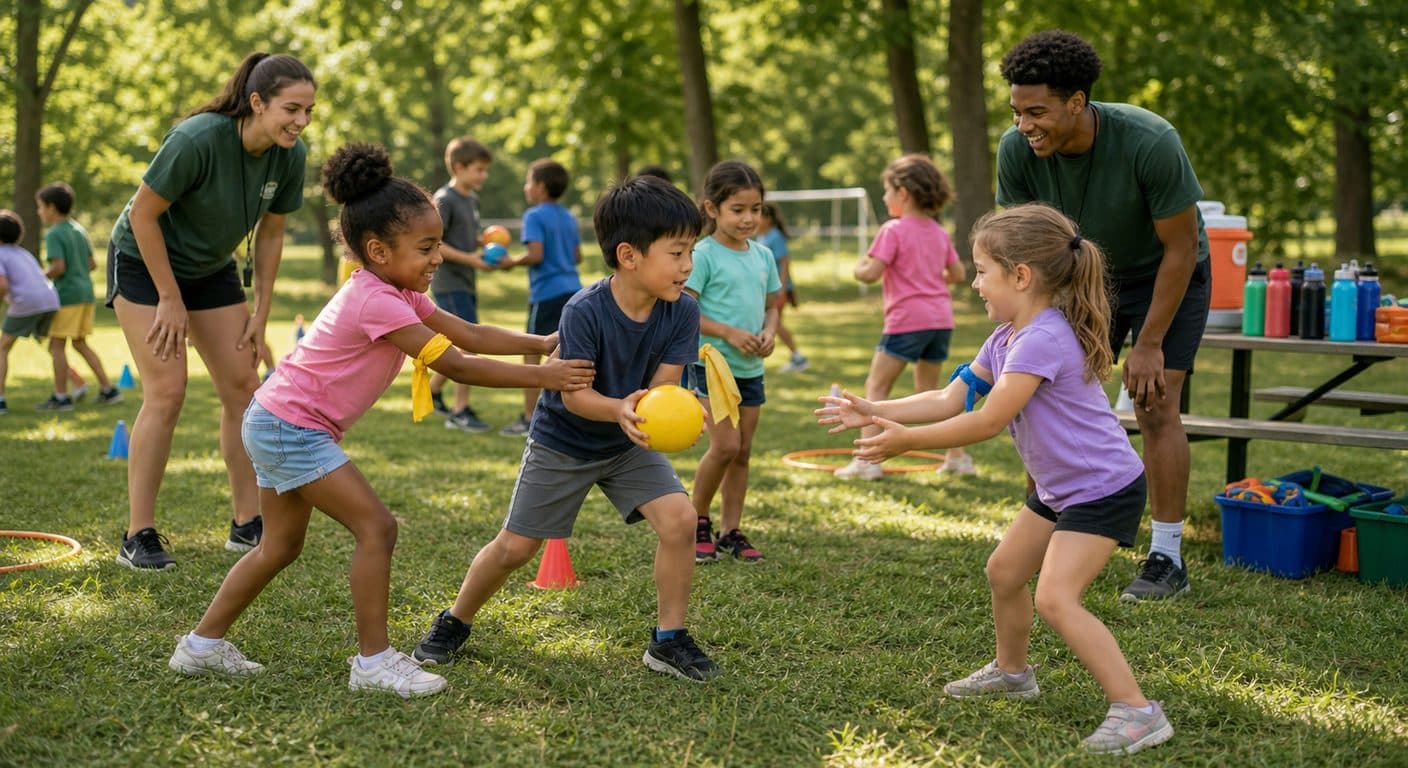
Use these summer camp activity ideas as a planning menu. Select activities for the actual campers, staff, space and conditions in your program, then prepare the materials and an indoor alternative. The list is not a claim that each activity is suitable for every age or site.
Before choosing an activity
Check your program's activity rules, supervision plan, accessibility needs and current weather procedures. Use equipment as intended and keep exits and staff sightlines clear. Activities involving water, food or specialist equipment need their specific program procedures; this list does not provide that training.
Outdoor & Active Activities
These high-energy activities get kids moving, build gross motor skills, and take full advantage of summer weather.
-
Capture the Flag - The classic camp game. Split into two teams, hide flags, and strategize. Adapt boundaries and rules to the group.
-
Obstacle Course Challenge - Set up cones, tunnels, balance beams, and tire runs. Time each camper and let them try to beat their personal best throughout the week.
-
Nature Scavenger Hunt - Create age-appropriate checklists of items to find outdoors: specific leaves, insects, animal tracks, cloud shapes, and natural textures. Great for combining movement with observation skills.
-
Kickball Tournament - Easy rules that most kids already know. Organize a week-long tournament with team names and a bracket board.
-
Relay Challenge - Use walking or rolling relays with a large soft object. Let each team choose a shared goal rather than requiring tied legs or backward running.
-
Geocaching Adventure - Hide containers around your camp property with small prizes inside. Give teams GPS coordinates or hand-drawn maps to find them.
-
Field Day Olympics - Organize a full day of events: long jump, sprint races, sack races, frisbee throw, and tug-of-war. Award ribbons for participation and achievement.
-
Hiking and Trail Exploration - If your facility has nearby trails, plan weekly hikes. Bring field guides for identifying plants, birds, and insects along the way.
-
Cooperative Ball Roll - Give the group a large soft ball and marked targets on level ground. Work together to reach each target without eliminating players.
-
Target Design - Campers design ground targets with chalk or paper and roll soft balls toward them. Adjust distance and offer seated participation.
Arts & Crafts Activities
Creative projects give kids a chance to slow down, express themselves, and take home something they made.
-
Tie-Dye T-Shirts - A summer camp classic for good reason. Set up stations with different folding techniques (spiral, bullseye, crumple) and let kids create wearable art.
-
Nature Art Collages - Collect leaves, flowers, sticks, and stones during outdoor time, then use them to create art pieces on cardboard or canvas.
-
Friendship Bracelet Making - Teach several patterns from simple to complex. Older kids can learn advanced techniques and teach younger campers.
-
Camp Mural Project - Dedicate a large wall or banner paper to a collaborative mural that grows throughout the summer. Each week adds a new section.
-
Clay Sculpture - Air-dry clay requires no kiln and lets kids create everything from animals to bowls. Paint them the next day once dry.
-
Recycled Art Challenge - Collect clean recyclables (bottles, cardboard, cans) and challenge teams to build sculptures, inventions, or art installations.
-
Watercolor Painting - Set up easels outdoors and let kids paint landscapes, still life arrangements, or abstract compositions. Watercolors are easy to clean up and forgiving for beginners.
-
Camp Newspaper or Zine - Older campers can write, illustrate, and "publish" a weekly camp newspaper with stories, comics, interviews, and activity reviews.
STEM & Discovery Activities
Hands-on science and technology activities build critical thinking skills while feeling like play.
-
Paper Glider Design - Fold paper gliders and compare designs in a clear, designated throwing direction. Keep people out of the landing area.
-
Bridge Building Challenge - Build small bridges from craft sticks and tape. Add light test objects gradually on a table; stop before loose pieces become a hazard.
-
Sun and Shade Observation - Compare how identical non-food objects feel in shade and sunlight without touching hot surfaces. Record observations; use staff-approved instruments if measuring temperature.
-
Bug Observation Walk - Look for insects without handling or collecting them. Sketch what campers notice and keep clear of nests or unfamiliar plants.
-
Coding with Scratch - For camps with computer access, MIT's free Scratch platform lets kids create animations and games with visual block-based coding. Choose tasks the group can follow and offer an unplugged alternative.
-
Weather Station - Build simple weather instruments (rain gauge, wind vane, thermometer reading) and track daily weather patterns throughout the summer.
-
Paper Package Challenge - Design a package to protect a paper model during a short, staff-managed tabletop test. Compare designs and revise them without raw eggs or climbing.
-
Gardening and Plant Science - Plant fast-growing seeds (sunflowers, beans, radishes) early in the summer. Track growth, learn about photosynthesis, and harvest by late summer.
Team Building Activities
These activities develop cooperation, communication, and leadership skills.
-
Team Shape Puzzle - Teams arrange large cards into a shape using spoken or visual directions. Offer roles for placing cards, planning or checking the result.
-
Map Directions Game - Partners give directions to move a token on a tabletop map. Keep eyes open and compare how different instructions affect the route.
-
Camp Talent Show - Give campers a week to prepare acts (individually or in groups), then host a show on Friday. Every act gets celebrated.
-
Menu Design Challenge - Teams design an imaginary camp menu with paper food cards. Discuss preferences without preparing or tasting food.
-
Campfire Storytelling - Take turns adding to a collaborative story. One person starts with a sentence, the next person adds to it, and the story evolves in unexpected directions.
-
Miniature Shelter Design - Build model shelters from paper and craft sticks on a table. Compare how each design covers a paper figure without ropes or overhead loads.
-
Quick Team Challenges - Try cup stacking or sorting large picture cards. Offer untimed play and avoid food-in-mouth challenges.
-
Counselor Clue Trail - Staff place clues within a defined, supervised area. Campers solve them together; no hiding from supervisors or physical capture is involved.
Water Activities
Choose water or dry alternatives according to your program procedures and conditions.
-
Sponge Transfer - Move water with large sponges between shallow containers under the program's water-play procedures. Offer a dry sorting alternative.
-
Chalk Path Challenge - Create a route of chalk shapes on level, dry ground. Walk, roll or step between them; avoid wet sliding surfaces.
-
Water Painting - Use brushes and small amounts of water to paint a suitable outdoor surface. Keep walking routes dry and follow water-play procedures.
-
Sponge Target Toss - Toss soft dry sponges at ground targets, away from people. Add distance options and a seated station.
-
Water Measure Station - Compare marked containers using small amounts of water with direct supervision. Empty containers after the activity and provide a dry measuring option.
-
Pool Noodle Shapes - Arrange noodles into shapes on level ground. Use them as building materials rather than striking or unbalancing other campers.
-
Fabric Pattern Relay - Teams arrange dry fabric squares into a shared pattern. Keep fabric off walking routes and offer tabletop participation.
-
Summer Station Rotation - Combine water painting, dry sponge targets and chalk design in separate staff-supervised stations. Keep a dry option available and follow the program's water procedures.
Rainy Day & Indoor Activities
Because summer storms happen. Having a strong indoor backup plan keeps the fun going.
-
Indoor Fort Building - Give each team paper and cardboard to create tabletop model forts. Compare designs without covering exits or creating enclosed play spaces.
-
Camp Karaoke - Queue up age-appropriate songs and let kids sing solo or in groups. Even reluctant participants enjoy being in the audience.
-
Board Game Tournament - Set up stations with different games (chess, checkers, Connect Four, Uno). Campers rotate through and earn points at each station.
-
Mystery Escape Room - Create a DIY escape room with puzzles, codes, and hidden clues themed to your camp. Do not lock doors; keep exits clear. Offer an untimed version; no child is physically confined.
-
Improv Games - Theater games like "Yes, And," freeze tag improv, and scenes from a hat build confidence and creativity. No props or setup required.
-
Documentary Making - Give teams a tablet or camera and a topic (camp history, day in the life, nature documentary). Use objects or drawings as subjects unless your program has the required permission for recording people. Keep recordings within the approved sharing process.
-
Yoga and Mindfulness - A calm counterbalance to high-energy activities. Lead kid-friendly yoga poses with animal names and guided breathing exercises.
-
Camp Trivia - Create rounds of trivia covering camp knowledge, pop culture, science, and silly questions. Use a buzzer system or raise-hand format for teams.
Tips for Planning Camp Activities
Balance Your Schedule
A well-structured camp day alternates between high-energy and low-energy activities. A typical schedule might look like this:
| Time | Activity Type | Example |
|---|---|---|
| 9:00 AM | Active outdoor | Capture the Flag |
| 10:00 AM | Creative/calm | Tie-dye project |
| 11:00 AM | STEM challenge | Bridge building |
| 12:00 PM | Lunch + free play | |
| 1:00 PM | Water activity | Sprinkler course |
| 2:00 PM | Team building | Talent show prep |
| 3:00 PM | Choice time | Camper picks activity |
Adapt the challenge to the group
For younger campers, simplify rules, demonstrate a turn and use larger materials. For older campers, invite design choices, planning roles and revisions. Age alone does not decide suitability: consider individual needs, staff preparation and the setting.
For an 8–12-year-old group, a possible sequence is a map-directions game, a paper bridge design and a collaborative zine. This is an example, not a prescribed age standard. Offer roles such as illustrator, planner, materials organizer and tester so campers can participate in different ways.
Prepare an indoor alternative
Pair each outdoor plan with an indoor activity that uses available staff and space. A scavenger hunt might become a picture-clue puzzle; a chalk design might become a paper mural. Do not move an active outdoor game into a crowded room unchanged.
Use the camp activity worksheet
Record the group, location, materials, lead staff member, participation options, weather decision and backup plan. The fictional example pairs a nature observation walk with a tabletop picture sort. Staff should verify the plan against the actual roster and their supervision responsibilities before starting.
The sample day above is illustrative and omits local arrival, departure, rest and supervision details. Build those into your own plan. At each change of activity, use your established procedure to account for campers and transfer responsibility clearly.
Afterward, note which instructions or adaptations helped. Invite campers to suggest the next variation without promising that every idea can be offered.
Connect programming to camp operations
Check who is expected before preparing group materials. The camp enrollment report by session helps organize that planning question, while the summer camp registration guide covers the earlier registration process.
Share a specific description of the day's activity with families through the approved communication process. Avoid recording or sharing other campers without the required permissions. Explore Bloomily for camps with your registration and daily communication needs; confirm any particular activity-planning feature in a demonstration rather than assuming it is included.
Common questions
Which activities work for ages 8–12? Consider design challenges, collaborative art and map games, then adapt the difficulty and roles to the actual group.
What should we do when weather changes? Follow your program's weather procedures and use a prepared indoor plan that fits the available space and supervision.
Does the worksheet replace an activity safety plan? No. It organizes preparation and points staff back to the program procedures they must follow.
Download the worksheet
Download the editable CSV worksheet. Open it in Excel, Google Sheets, or another spreadsheet application. The first data row is a fictional example; delete it before entering your own records. The file has no automatic calculations. Keep completed copies in your approved staff storage, not on a public link.