

Daily Reports for Daycare: What Parents Actually Want

The 6 elements parents want in daycare daily reports are: (1) emotional well-being, (2) social interactions, (3) learning activities, (4) meals and naps, (5) special moments or milestones, and (6) photos. Parents consistently rank emotional context ("Was my child happy?") above logistics ("What did they eat?") in surveys.
| Priority | What Parents Want | What Many Reports Include |
|---|---|---|
| 1st | Emotional well-being | Often missing |
| 2nd | Social interactions | Sometimes included |
| 3rd | Activities/learning | Usually included |
| 4th | Meals/naps | Almost always included |
| 5th | Milestones/special moments | Rarely captured |
| 6th | Photos | Varies widely |
Teachers using digital daily report software complete reports 60% faster—averaging 2-3 minutes per child vs. 5-10 minutes manually. The most effective reports are specific ("Emma spent 20 minutes building with Sofia") rather than generic ("played with blocks").
This guide covers how to write reports parents love, photo best practices, and how technology can cut your reporting time dramatically.
What Parents Really Want to Know

When parents hand you their child in the morning, they wonder about their child all day long. At 3 PM, they check their phone. What are they hoping to see?
The Hierarchy of Parent Concerns
Based on surveys and parent feedback, here's what parents care about most (in order):
- Emotional well-being: Was my child happy? Upset? Comfortable?
- Social interactions: Did they play with other kids? Make friends?
- Activities and learning: What did they do? What did they learn?
- Basic needs: Did they eat? Did they sleep?
- Special moments: Milestones, funny things they said, unique events
- Photos: Visual proof of a good day
Notice that "ate lunch" and "took a nap" are near the bottom. Yet many daily reports lead with (or only include) these basic facts.
The Emotional Core
What parents really want is reassurance that:
- Their child was happy while they were away
- Someone noticed and appreciated their child as an individual
- They're not missing everything while at work
Daily reports that address these emotional needs build deep trust with families.
What Makes a Great Daily Report
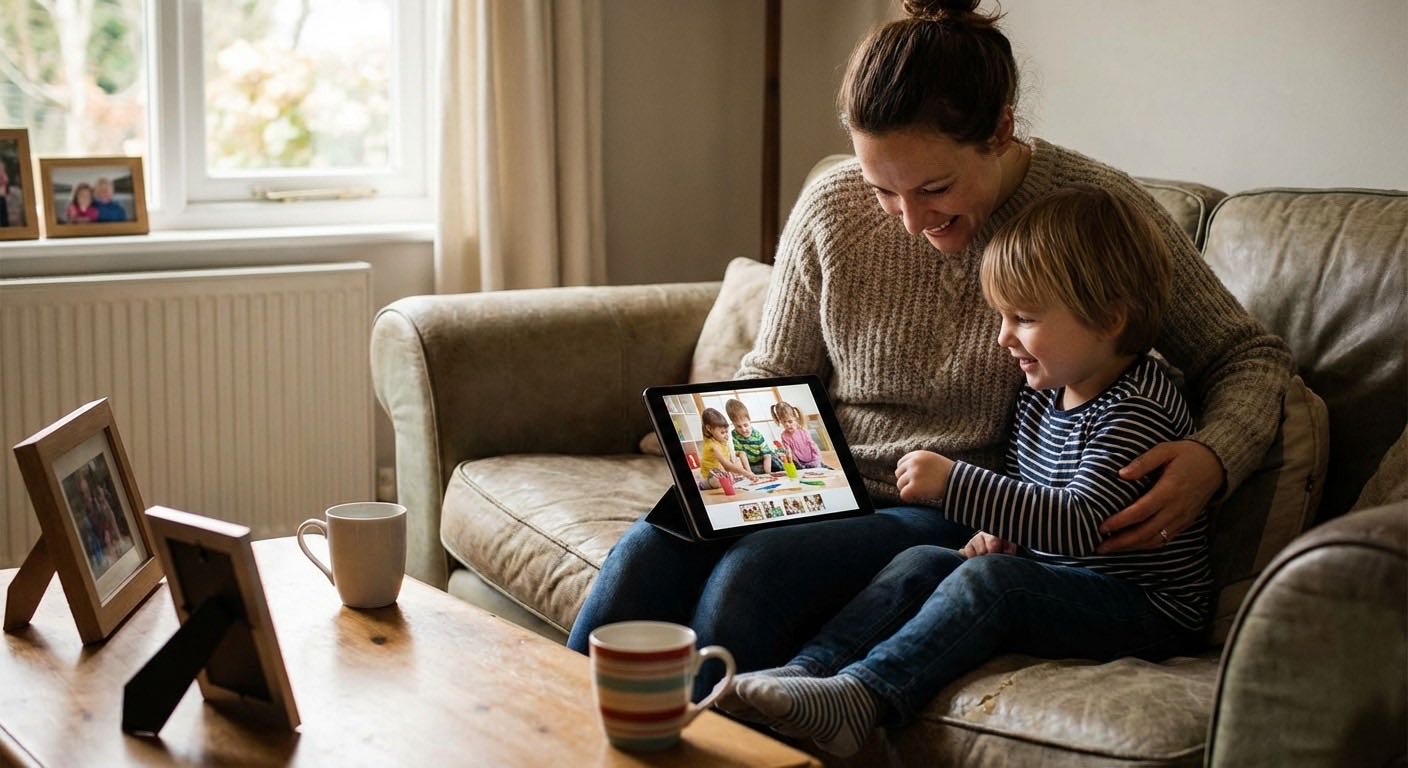
Elements of an Excellent Report
| Element | Why It Matters |
|---|---|
| Emotional context | "Emma was SO excited when..." |
| Specific observations | Shows you paid attention to THIS child |
| Developmental moments | Connects activities to growth |
| Personality glimpses | Makes parents feel connected |
| Photos | Worth 1,000 words |
| Honesty | Builds trust (even when news isn't perfect) |
Before and After: Report Transformation
Mediocre Report:
"Liam had a good day. He played with toys, ate most of his lunch, and took a 1.5 hour nap. He played outside in the afternoon."
This report tells parents nothing meaningful. It could apply to any child on any day.
Excellent Report:
"Liam bounced in this morning—literally! He went straight to the train table and spent almost 30 minutes building an elaborate track with Oliver. It's amazing to see how their friendship has grown.
He ate all his pasta at lunch (picked out the peas, typical Liam!) and had a solid 90-minute nap.
The highlight was afternoon art—he was so proud of his handprint turkey that he asked to make TWO so he could give one to his sister. That thoughtfulness just melted my heart.
One quick note: Liam bumped his knee on the playground climber. He cried for a minute, but was back to playing within moments. No bruise visible, but wanted you to know!"
This report:
- Opens with energy and emotion
- Mentions a specific peer relationship
- Includes honest food details without alarm
- Highlights a meaningful moment
- Shows developmental observation (thoughtfulness)
- Proactively addresses a minor incident
Daily Report Best Practices
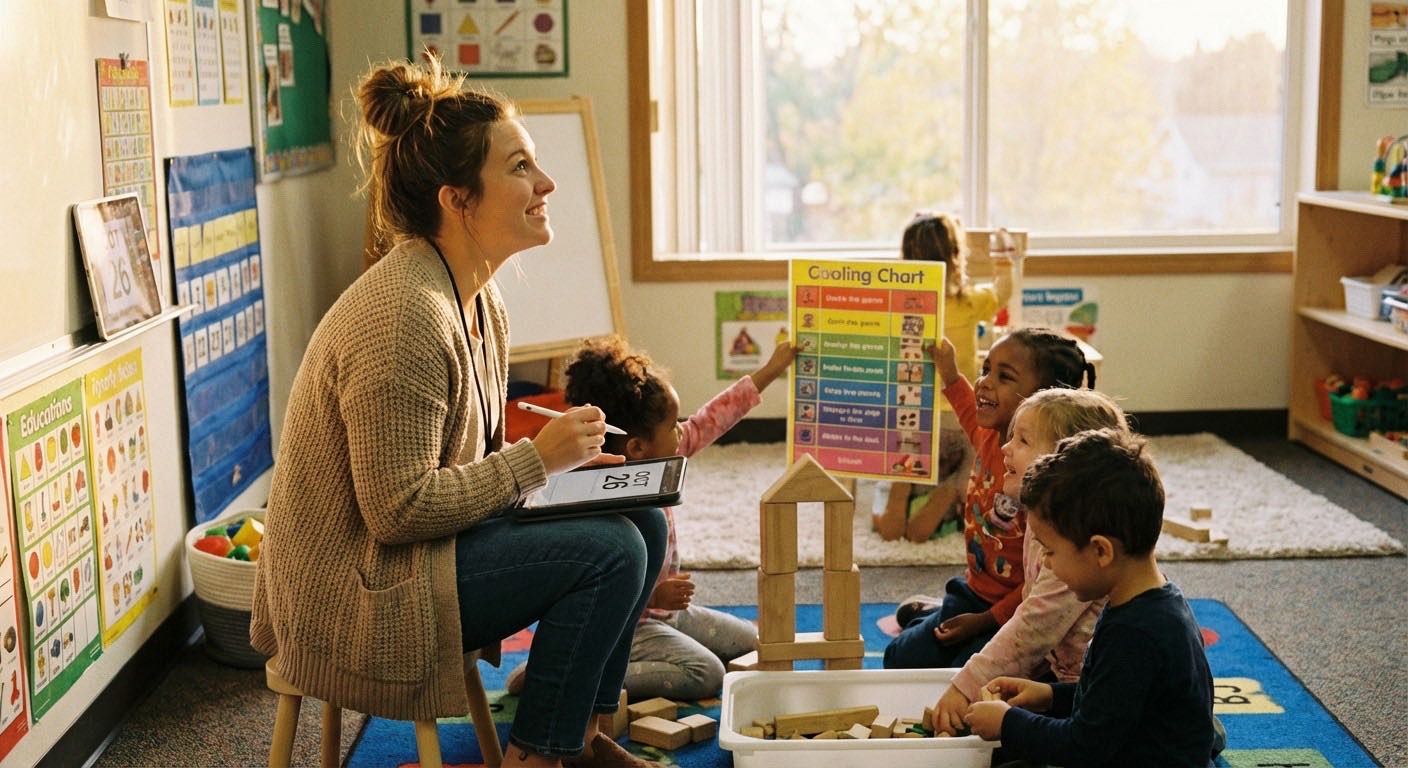
1. Write Throughout the Day
Don't save everything for the end. Teachers who try to write reports from memory at 5 PM:
- Forget important details
- Create generic, vague reports
- Run out of time and rush
- Miss sending reports for some children
Better approach: Capture moments as they happen. A quick note or photo takes 10 seconds; reconstructing the moment later takes 5 minutes.
2. Focus on One Meaningful Moment
You don't need to document every activity. One specific, meaningful moment is more valuable than a list of everything that happened.
Ask yourself: "What would I want to know if this were my child?"
3. Include Photos (The Right Ones)
Photos transform daily reports. But not all photos are equal.
Great photos show:
- Genuine engagement (not posed)
- Your child specifically (not just the group)
- Activities and interactions
- Progress or accomplishments
- Joy, focus, or discovery
Skip photos that are:
- Blurry or poorly lit
- All from the same angle/time
- Only showing the back of heads
- Unflattering (eating with mouth open, etc.)
- Without your child visible
Photo targets:
- Aim for 3-5 photos per child per day
- Variety: activities, social, individual
- Quality over quantity
4. Be Specific, Not Generic
Generic statements feel like form letters. Specificity shows attention.
| Generic | Specific |
|---|---|
| "Had fun at circle time" | "Asked THREE questions during our weather discussion—so curious!" |
| "Played with friends" | "Built an amazing fort with Sofia and Max" |
| "Good lunch" | "Tried the carrots for the first time!" |
| "Nice nap" | "Fell asleep within 5 minutes—he was tired!" |
| "Good day" | "One of those days where his smile was contagious" |
5. Be Honest About Challenges
Parents appreciate honesty more than spin. If something was hard, say so:
"Today was a bit tricky for Emma. She had a hard time at drop-off (lots of tears for about 10 minutes) and struggled to share during blocks. But she rallied beautifully after snack and had a great afternoon. We're working on taking deep breaths when we're frustrated."
This builds trust and shows you're paying attention.
6. Document Development (Sometimes)
Occasionally connect activities to developmental progress:
"I noticed Mia holding her crayon with a proper pincer grasp today—big step from last month! Her fine motor skills are really developing."
Parents love knowing their child is growing, not just being supervised.
What NOT to Include in Daily Reports
Skip the Obvious
Don't waste space on expected activities:
- ❌ "We had circle time" (of course you did)
- ❌ "We played on the playground" (that's the schedule)
- ❌ "We read books" (expected)
Only mention routine activities if something notable happened during them.
Avoid Vague Positive Language
- ❌ "Great day!"
- ❌ "So much fun!"
- ❌ "Played nicely"
- ❌ "Good job!"
These phrases feel generic and don't tell parents anything specific.
Don't Mention Other Children's Negative Behavior
- ❌ "Sarah hit Emma today"
- ✓ "Emma got a bump from another child; we addressed it with everyone"
You can mention your child's experience without naming the other child.
Limit Negative Tone
If challenges dominated the day, still find something positive:
"Rough start this morning—Jackson was pretty upset at drop-off and had trouble settling. But we had a breakthrough after lunch when he asked to help set up art, and he was super engaged painting. Tomorrow's a new day, and we'll keep working on morning transitions."
Handling Difficult Days
Some days are genuinely hard. Here's how to report them honestly without alarming parents:
The Sandwich Approach
- Start with something positive (however small)
- Address the challenges honestly
- End with hope or a plan
Example:
"Olivia came in excited about her new shoes this morning—so cute!
I want to share that she had a harder day than usual. She cried on and off for about an hour after drop-off, didn't want to participate in morning activities, and had trouble eating lunch. We're not sure what was bothering her, but she seemed sad.
The good news: she perked up after nap and had a sweet time playing babies with her friends in the afternoon. We'll keep an extra close eye on her tomorrow and let you know how it goes. Please let us know if anything at home might be affecting her."
When Something Concerning Happens
For incidents, injuries, or concerning behaviors:
- Notify immediately if urgent (don't wait for daily report)
- State facts clearly without editorializing
- Explain what you did in response
- Offer follow-up conversation
Daily Report Timing
When to Send
Most parents prefer reports before pickup—ideally 30-60 minutes before:
- Too early: Doesn't capture afternoon events
- Just right: Parents see it on their way to get child
- Too late: Parents already have child; defeats purpose
Pro tip: Set a deadline (e.g., 4:30 PM) for report completion. Build this into the schedule.
Consistency Matters
Parents come to expect reports at certain times. Inconsistency creates anxiety:
- "Why no report today? Is something wrong?"
- "I haven't heard anything—should I call?"
If you can't send a full report, send something: "Busy day! Full report coming soon."
Technology That Helps
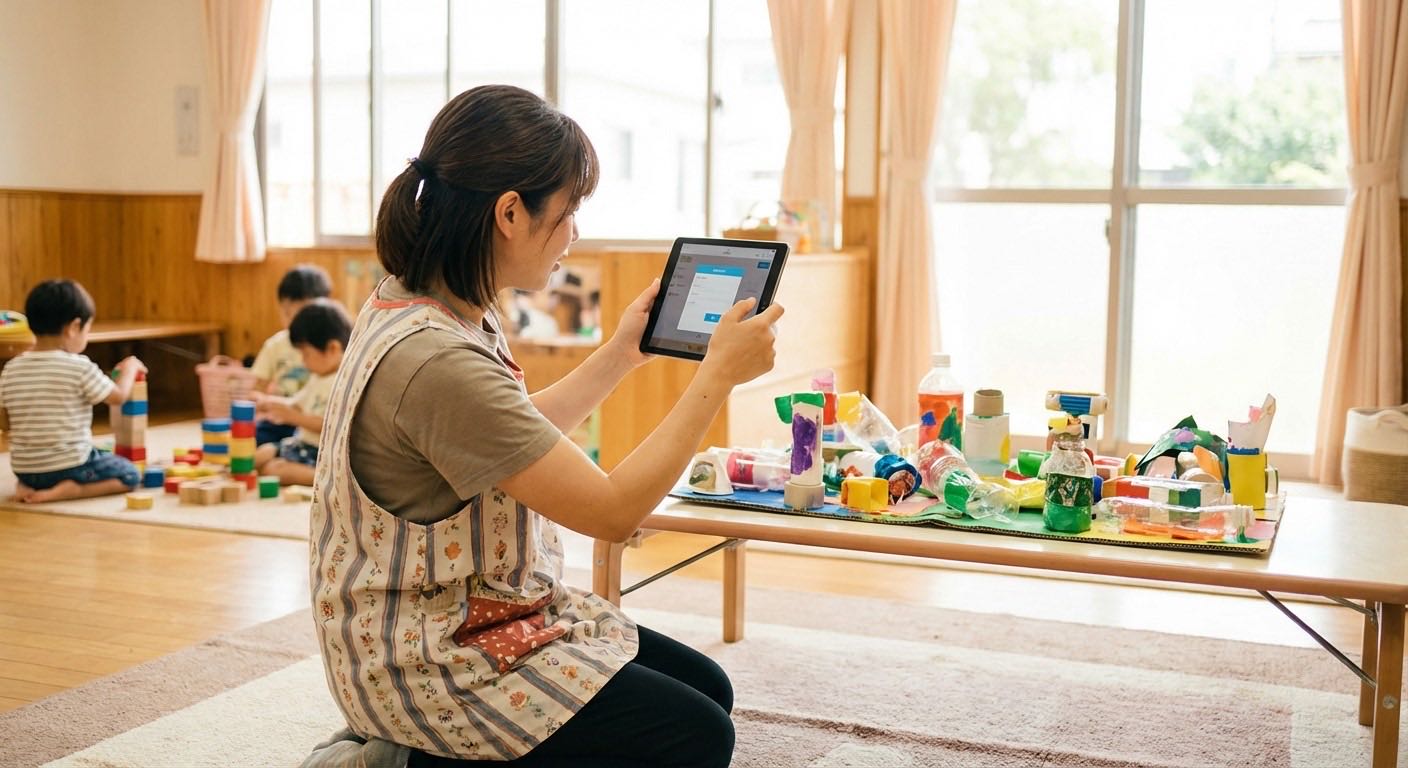
Modern childcare apps dramatically reduce reporting time while improving quality.
Time Savings
| Task | Manual Process | With App |
|---|---|---|
| Taking notes | Paper, then transcribe | Tap on phone |
| Photos | Camera, download, attach | Phone → app directly |
| Meals/naps | Log on paper, transfer | Tap to record |
| Report creation | Write from memory | Auto-compiles |
| Delivery | Print or email | Push notification |
Typical time savings: 30-45 minutes per day across classroom
Features to Look For
| Feature | Benefit |
|---|---|
| Photo tagging | Photos auto-attach to right child |
| Activity templates | One tap for common activities |
| AI assistance | Help generating narrative text |
| Real-time updates | Parents see moments as they happen |
| Developmental tracking | Connect activities to milestones |
| Multi-child entry | Log for several children at once |
AI-Assisted Reports
Newer systems use AI to help create narrative summaries:
- You input: Photos, activities, notes throughout day
- AI generates: Engaging, personalized narrative
- You review: Edit as needed, send
This can reduce report-writing from 5-10 minutes per child to under 1 minute while improving quality.
Sample Daily Reports by Age

Infant Report
Today's Highlights
Bella was bright-eyed and curious today! She spent lots of time watching the other babies and kicked her legs whenever someone came to play with her.
She took 2 bottles (6oz and 5oz) and had some rice cereal at lunch—she's getting better at the spoon! 🥄
Morning nap was short (45 min), but she made up for it with a 2-hour afternoon snooze.
Big moment: She rolled from tummy to back during floor time! We cheered and she seemed SO pleased with herself.
📸 [3 photos attached]
Toddler Report
Jake's Day
Someone woke up on the silly side of the bed! Jake spent the morning making everyone laugh by putting blocks on his head and calling himself a "building."
He explored our new sensory bin (shaving cream!) and really went for it—had to wash his hands three times before lunch. Worth it for how much he enjoyed it!
Meals: Good breakfast (all the fruit!), about half his lunch, full snack Nap: 1 hour 45 minutes
We practiced saying "please" and "thank you" today—he's catching on! Had a few frustrated moments when it was time to clean up (normal toddler stuff), but redirected pretty well.
📸 [4 photos: sensory play, outside time, block tower, snack time]
Preschool Report
Emma's Wednesday!
Ask Emma about the experiment we did today—we made volcanoes with baking soda and vinegar, and her reaction was PRICELESS. She must have asked to do it "one more time" at least ten times!
During choice time, she set up an elaborate "veterinarian office" in dramatic play and was very serious about treating all the stuffed animals. Leadership skills in action!
She ate well at lunch and had a solid rest time (didn't sleep but rested quietly, which is perfect for her).
One thing we're working on: interrupting when friends are talking. We practiced "waiting for a pause" today and she's getting better.
📸 [3 photos attached—the volcano reaction photo is a must-see!]
Measuring Report Success
How do you know if your daily reports are working?
Metrics to Track
| Metric | How to Measure | Target |
|---|---|---|
| Completion rate | % of children with reports daily | 100% |
| On-time delivery | % sent before deadline | 95%+ |
| Parent engagement | App open rates, if available | 80%+ |
| Parent feedback | Surveys, informal comments | Positive |
Signs Your Reports Are Working
- Parents comment positively on specific details
- Parents ask follow-up questions about activities
- Fewer anxious calls during the day
- Parents share reports with grandparents
- Word-of-mouth referrals mention communication
Conclusion
Daily reports aren't just documentation—they're your daily marketing, your relationship builder, and often a parent's primary window into their child's day.
The best reports:
- Capture authentic moments
- Include specific, personal details
- Feature quality photos
- Are consistent and timely
- Balance honesty with positivity
Invest in getting reports right, and you'll build the kind of trust that keeps families enrolled for years.
Want daily reports parents love? Bloomily's AI-assisted reports help teachers create personalized, photo-rich updates in minutes. See how it works or get started.
Frequently Asked Questions
How long should a daily report be?
Quality over quantity. A few specific, meaningful sentences with 3-5 photos beat a page of generic information. Aim for 2-3 minutes to read.
What if nothing notable happened?
Something notable always happened—you just need to notice it. Did they show kindness? Focus intensely on something? Try a new food? Have a conversation? The "unremarkable" days often contain beautiful small moments.
Should I mention every bump and scrape?
Document all incidents per your policy, but you don't need to alarm parents about every minor event. A scraped knee during active outdoor play is normal; mention it briefly. A bite from another child or something unusual warrants more detailed communication.
Can parents reply to daily reports?
Yes, and you should encourage it! Parent responses build dialogue. Just set expectations about response time (during business hours, within 24 hours).
What about children who are always "easy"?
It's easy to under-report on children who don't require extra attention. Make sure every child gets equally detailed reports. The quiet, easy children have moments worth capturing too.