

Parent Communication Guide for Childcare Directors

Effective parent communication in childcare includes three core channels: daily activity reports (sent every day), weekly newsletters (for community updates), and real-time messaging (for urgent matters). In parent satisfaction surveys, communication consistently ranks as the #1 factor—above curriculum, facilities, and even price.
| Communication Channel | Frequency | Best For |
|---|---|---|
| Daily reports | Every day, by 5 PM | Activities, photos, meals, naps, emotional updates |
| Weekly newsletters | Friday afternoons | Upcoming events, curriculum themes, staff highlights |
| In-app messaging | As needed | Quick questions, routine updates |
| In-person conversations | Scheduled | Developmental concerns, incidents, onboarding |
| Phone calls | Emergencies only | Time-sensitive matters requiring immediate response |
Centers with strong communication see higher retention, more referrals, and parents willing to pay premium tuition. The key is consistency: parents come to expect reports at certain times, and silence creates anxiety.
This guide covers daily reports, newsletters, handling difficult conversations, and setting boundaries that protect staff.
Why Communication is Your Competitive Advantage
In surveys of childcare parents, communication consistently ranks as the #1 factor in satisfaction—above curriculum, facilities, and even price.
Consider the parent experience:
- They spend 8-10 hours away from their child
- They wonder: Did she eat? Was he happy? Did anything happen?
- They feel guilt about working instead of being there
- They want to feel connected to their child's day
Centers that communicate well ease this anxiety. Parents feel included, informed, and confident in their choice. This leads to:
- Higher retention: Satisfied parents stay longer
- More referrals: Happy families tell friends
- Easier difficult conversations: Trust makes hard topics manageable
- Willingness to pay: Perceived value increases
Communication isn't overhead—it's your marketing, retention, and quality strategy combined.
Communication Channels: When to Use Each
1. Parent App (Daily Communication)
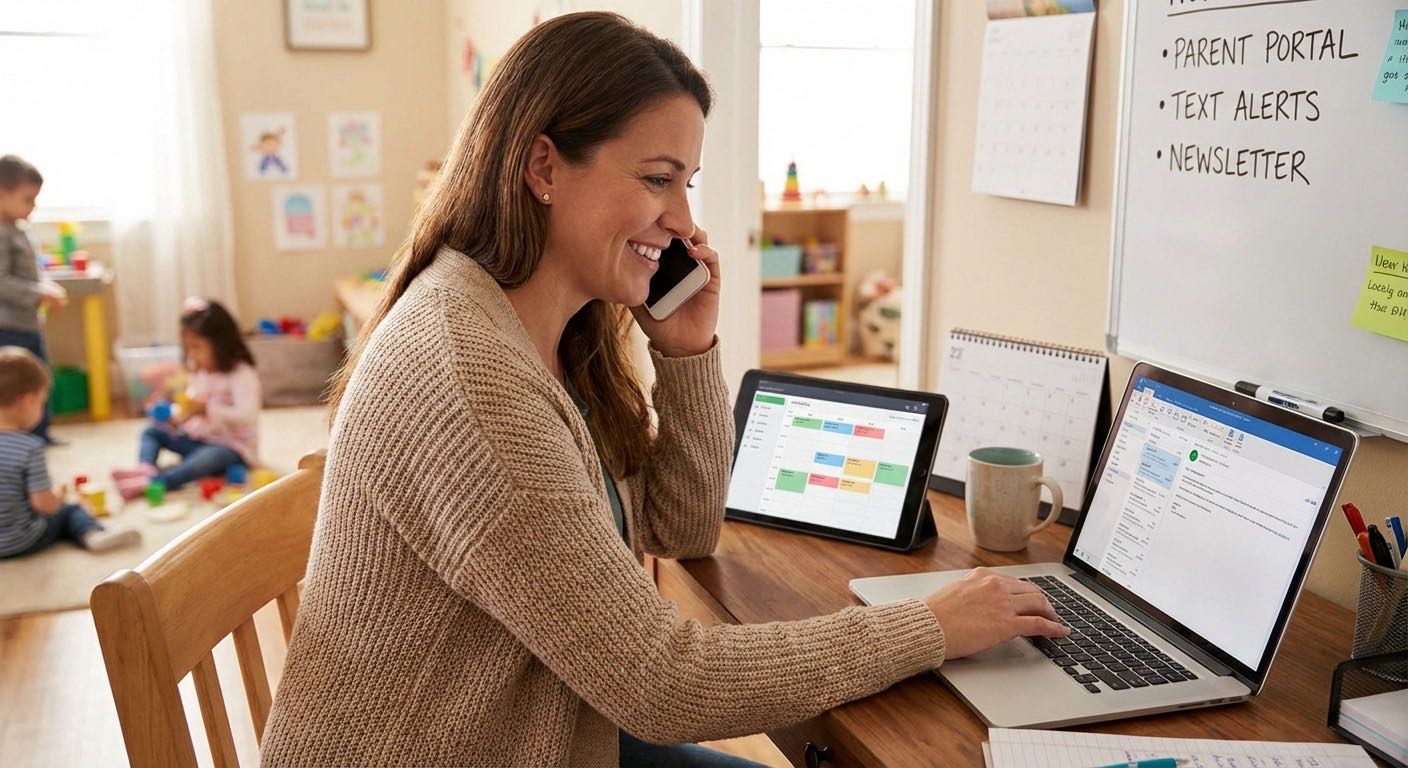
A dedicated parent app is essential for modern childcare. It's where parents expect to find:
- Daily activity reports
- Photos and videos
- Real-time updates
- Messaging with teachers
- Attendance records
- Billing information
Best for: Day-to-day updates, photos, quick questions, routine information
Avoid: Serious concerns, lengthy discussions, anything requiring nuance
2. In-Person Conversations
Some communication requires face-to-face interaction:
- New family onboarding
- Developmental concerns
- Behavioral discussions
- Incident follow-ups
- Building relationships
Tips for in-person communication:
- Never discuss sensitive topics at pickup with other parents present
- Schedule meetings during nap time or after hours
- Start with positives before addressing concerns
- Listen more than you talk
3. Email
Email works best for:
- Formal documentation
- Policy changes
- Important announcements
- Follow-ups to meetings
- Complex information that needs re-reading
Avoid: Time-sensitive information, casual updates (use the app instead)
4. Phone Calls
Reserve phone calls for:
- Emergencies
- Time-sensitive matters
- Situations requiring immediate response
- Complex discussions with parents who prefer calls
5. Newsletters
Newsletters build community and share:
- Upcoming events
- Center news
- Educational content
- Staff highlights
- Curriculum themes
Frequency: Weekly or bi-weekly works best. Monthly newsletters often feel disconnected.
Daily Reports: What Parents Actually Want

Your daily reports are your most frequent communication touchpoint. Get them right, and parents feel connected. Get them wrong, and they feel anxious.
What Parents Care About (In Order)
- Was my child happy? Emotional state, mood, behavior
- What did they do? Activities, learning, play
- Did they eat and sleep? Meals consumed, nap duration
- Did anything notable happen? Milestones, funny moments, concerns
- Photos/videos Worth 1,000 words of text
What Parents Don't Care About
- Generic descriptions ("played with toys")
- Identical reports day after day
- Only negative observations
- Too much detail on routine activities
Sample Daily Report (Good vs. Bad)
Bad report:
"Emma had a good day. She ate lunch and took a nap. She played outside."
This tells parents nothing meaningful. Every child eats lunch and takes naps.
Good report:
"Emma was in great spirits today! She spent the morning building an elaborate block tower with her friend Sofia—they worked together for almost 20 minutes, which shows wonderful focus for her age. She ate most of her pasta at lunch (left the vegetables, but we'll keep trying!) and took a solid 2-hour nap. After nap, she loved painting with watercolors—she was so proud of her 'rainbow picture' and asked to bring it home. One of those days where you could just see her little personality shining!"
This report:
- Shares emotional context
- Highlights developmental observations (focus, social play)
- Is honest about meals without alarming
- Includes a specific, memorable moment
- Shows the teacher knows and cares about this specific child
Photo Best Practices
Photos transform daily reports from "fine" to "delightful."
DO:
- Capture candid moments of engagement
- Show children's faces (with permission)
- Include photos of artwork and projects
- Capture small group interactions
- Aim for 3-5 photos per child per day
DON'T:
- Take blurry, poorly lit photos
- Only photograph staged activities
- Forget to photograph quieter children
- Share photos of other children without permission
- Post anything that could embarrass a child
Handling Difficult Conversations
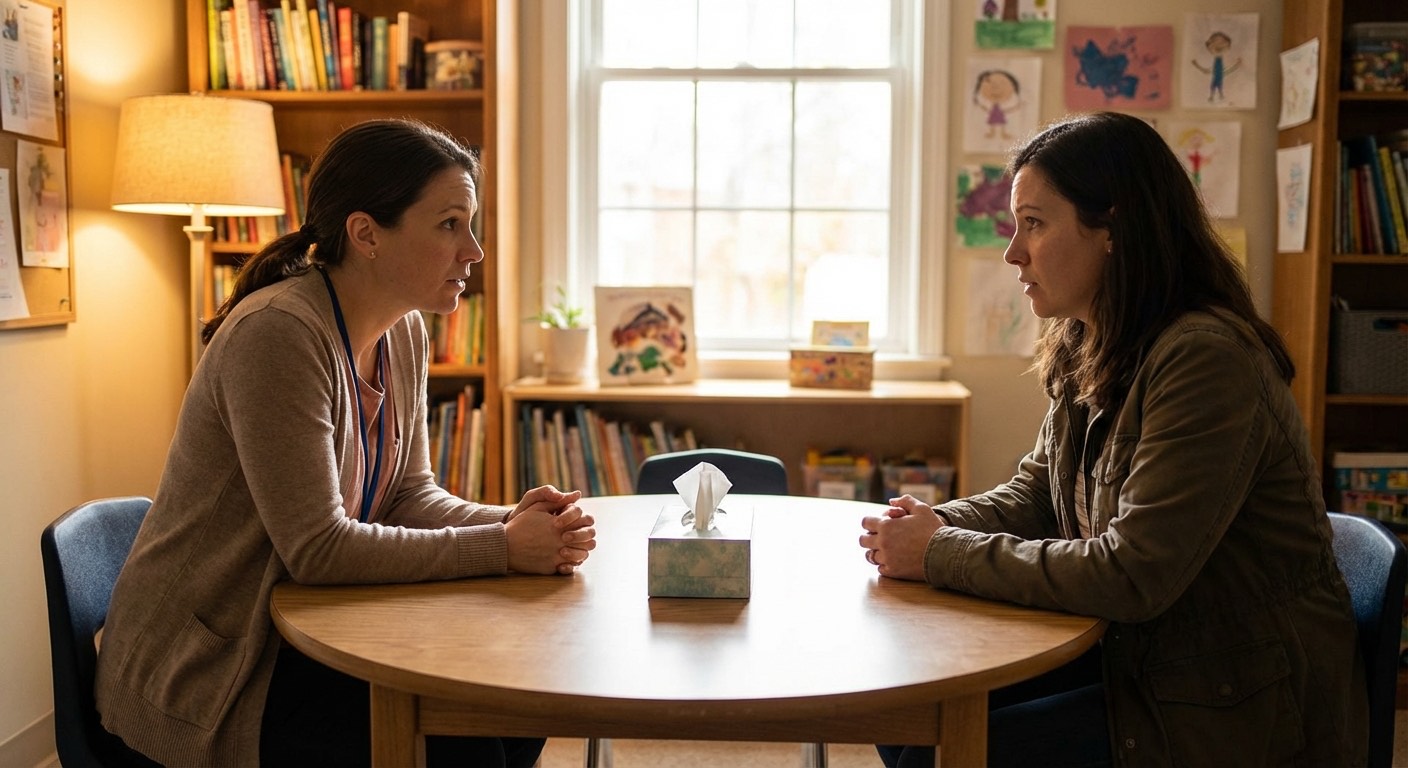
Every director dreads certain conversations. But handled well, these moments build trust rather than destroy it.
Late Pickup Conversations
Late pickups frustrate staff and disrupt operations. Address them directly but compassionately.
First occurrence:
"Hi Sarah, I noticed Emma was picked up at 6:15 today—our closing time is 6:00. I wanted to check in. Is everything okay? We understand things happen, but our staff has commitments after work, so we do need families to arrive by closing."
Repeated occurrences:
"Hi Sarah, this is the third late pickup this month. I understand schedules can be challenging, but this impacts our staff significantly. Our late fee policy is $1 per minute after 6:00. I'd hate for that to add up for you. Is there something about your schedule we can discuss? Would switching to extended care be helpful?"
Document everything and enforce policies consistently. Parents respect fairness.
Incident and Injury Conversations
When a child is injured at your center, parent communication determines whether trust survives.
During the incident:
- Ensure child safety first
- Contact parent immediately if medical attention needed
- Provide factual information without speculation
- Describe what you're doing to help
At pickup:
- Teacher should personally explain what happened
- Focus on facts: "During outdoor play, Emma tripped and bumped her head on the climber"
- Share what you did: "We applied ice, comforted her, and monitored for 30 minutes"
- Acknowledge feelings: "I know it's hard to hear your child was hurt"
- Provide incident report documentation
Never:
- Blame the child ("She was running too fast")
- Minimize ("It's not a big deal")
- Be defensive ("These things happen")
- Blame another child by name
Behavioral Concerns
Discussing behavioral challenges requires preparation and empathy.
Before the conversation:
- Document specific incidents with dates and details
- Identify patterns (time of day, triggers, contexts)
- Research developmental appropriateness
- Prepare specific strategies you've tried
During the conversation:
- Start with positives (genuine ones)
- Describe behavior without labeling the child
- Share your observations objectively
- Ask about behavior at home
- Collaborate on strategies
- Schedule follow-up
Sample framing:
"Marcus is such a bright, curious kid—his vocabulary is amazing, and the other children are drawn to him. I wanted to talk about something I've been noticing. At circle time, Marcus has been having trouble sitting with the group. He often gets up, distracts other children, and has difficulty following directions from teachers. We've tried several strategies, including giving him a fidget toy and seating him near a teacher. I wanted to share what we're seeing and hear if you notice similar things at home. Together, we can figure out the best way to support him."
Tuition and Payment Conversations
Money discussions feel awkward but are necessary.
For late payments:
"Hi Jennifer, I noticed your invoice for January is still outstanding. I wanted to reach out before any late fees apply. Is there anything going on that I should know about? We're happy to discuss payment arrangements if helpful."
For bounced payments:
"Hi Jennifer, your ACH payment was returned by your bank. This does incur a $25 returned payment fee per our policy. Please update your payment method in the app, or let me know if you'd like to discuss this."
Stay matter-of-fact about policies. Don't apologize for requiring payment.
Setting Communication Expectations

Clear expectations prevent misunderstandings.
What to Communicate Upfront
Include in your parent handbook and discuss at enrollment:
- Daily report timing: "Reports are sent by 5:00 PM each day"
- Response times: "We respond to app messages within 24 hours during business days"
- Emergency contacts: "Call us directly for emergencies; don't use the app"
- Meeting requests: "Request meetings via email; we'll respond within 48 hours"
- After-hours boundaries: "We don't respond to non-emergency messages after 6 PM"
Protecting Staff Boundaries
Teachers need work-life balance. Set clear guidelines:
- Teachers don't respond to messages after work hours
- Parents shouldn't text teachers' personal phones
- App messaging is monitored during business hours only
- Urgent matters go through the director
Communicate this to parents:
"Our teachers work hard during the day and deserve to recharge in the evenings. Please use the app for all communication, and know that responses will come during our operating hours. For emergencies, always call the center directly."
Newsletters That Parents Actually Read

Most childcare newsletters go unread. Here's how to create ones that engage.
Keep Them Short
Parents are busy. Ideal newsletter length:
- 3-5 minute read maximum
- Bullet points over paragraphs
- One main topic + quick updates
- Visual elements (photos, headers)
Include These Sections
| Section | Purpose |
|---|---|
| Opening photo | Captures attention |
| This week's highlight | One memorable story |
| Upcoming dates | Calendar reminders |
| Curriculum snapshot | What we're learning |
| Staff spotlight | Build relationships |
| Quick reminders | Important logistical items |
Sample Newsletter Template
📸 [PHOTO: Children engaged in this week's highlight activity]

THIS WEEK AT [CENTER NAME]

🌟 HIGHLIGHT OF THE WEEK
[One specific, engaging story from this week—be specific!]

📅 COMING UP
• Monday 1/20: Pajama Day!
• Wednesday 1/22: Fire truck visit (weather permitting)
• Friday 1/24: No school - staff development

📚 WHAT WE'RE LEARNING
This week we're exploring winter animals! Children will learn about
hibernation, migration, and how animals stay warm. Ask your child
about the bear cave we built in the dramatic play area!

👋 STAFF SPOTLIGHT
[Name] celebrates 5 years at our center this week!
[Brief, warm description of them and their impact]

📌 QUICK REMINDERS
• Please label all winter gear
• Tuition for February due January 31
• Parking lot reminder: Drop-off lane is for drop-off only

Have a great week!
[Director name]
Sending Frequency and Timing
- Friday afternoon works best (parents have time to read over weekend)
- Weekly or bi-weekly maintains connection without overwhelming
- Consistent day/time builds habit
Using Technology Effectively
Modern parent communication apps should enhance your communication, not complicate it.
Features That Matter
| Feature | Why It Matters |
|---|---|
| Photo sharing | Parents crave visual connection to their child's day |
| Real-time updates | Reduces parent anxiety |
| Read receipts | Know when messages are seen |
| Translation | Serve multilingual families |
| Push notifications | Ensure timely delivery |
| Offline access | Parents can view history anytime |
Common Mistakes with Parent Apps
Over-communicating: Don't message every 30 minutes. Batch updates appropriately.
Under-communicating: Don't go silent. Consistent daily reports build trust.
Generic content: Avoid copy-paste reports. Personalization shows care.
Ignoring messages: Respond within 24 hours. Silence feels like neglect.
Wrong channel for the message: Don't share serious concerns via app chat. Request a meeting.
Building a Communication Culture
Great communication isn't just policies—it's culture.
Train Your Staff
Invest in communication training:
- How to write engaging daily reports
- Photo-taking best practices
- Handling difficult parent interactions
- What to communicate and when
- De-escalation techniques
Regular Check-Ins
Schedule periodic "communication audits":
- Review sample daily reports
- Check response times
- Survey parent satisfaction
- Address gaps and celebrate wins
Lead by Example
Directors set the tone:
- Respond promptly to parent inquiries
- Write thoughtful newsletters
- Handle difficult conversations with grace
- Recognize staff who communicate well
Measuring Communication Success
Track these metrics:
| Metric | How to Measure | Target |
|---|---|---|
| Daily report completion | % of children with reports daily | 100% |
| Parent app engagement | % of parents who open reports | 80%+ |
| Response time | Average time to respond to messages | Under 24 hours |
| Parent satisfaction | Survey scores on communication | 4.5+ / 5 |
| Newsletter open rate | Email analytics | 50%+ |
Conclusion
Parent communication is the invisible infrastructure of great childcare. It's what separates "fine" centers from ones that families rave about.
The investment pays dividends in:
- Parent retention and loyalty
- Referrals and word-of-mouth
- Staff satisfaction (parents who communicate well are easier to work with)
- Your reputation in the community
Start with one improvement this week. Perhaps it's adding more photos to daily reports, or finally writing that newsletter. Small, consistent improvements compound into transformation.
Want to streamline parent communication? Bloomily helps childcare centers send beautiful daily reports, share photos, and communicate with families—all from one platform. See how it works or get started.
Frequently Asked Questions
How much should we communicate with parents?
Daily reports should go out every day, without exception. Beyond that, weekly newsletters and as-needed updates for incidents or concerns. Over-communicating is better than under-communicating.
What if parents want to communicate outside of business hours?
Set clear boundaries in your parent handbook and stick to them. Most parents respect boundaries when they're communicated clearly. For true emergencies, provide an emergency contact number.
How do we handle parent complaints on the app?
Acknowledge the concern promptly, then move the conversation offline. "Thank you for sharing this. I'd like to discuss it in person. Can we schedule a time to talk tomorrow?" Don't have difficult conversations via chat.
Should teachers have their own parent relationships or should everything go through the director?
Teachers should communicate daily through reports and casual conversation. Directors should handle concerns, conflicts, billing issues, and formal meetings. Both approaches build different aspects of trust.